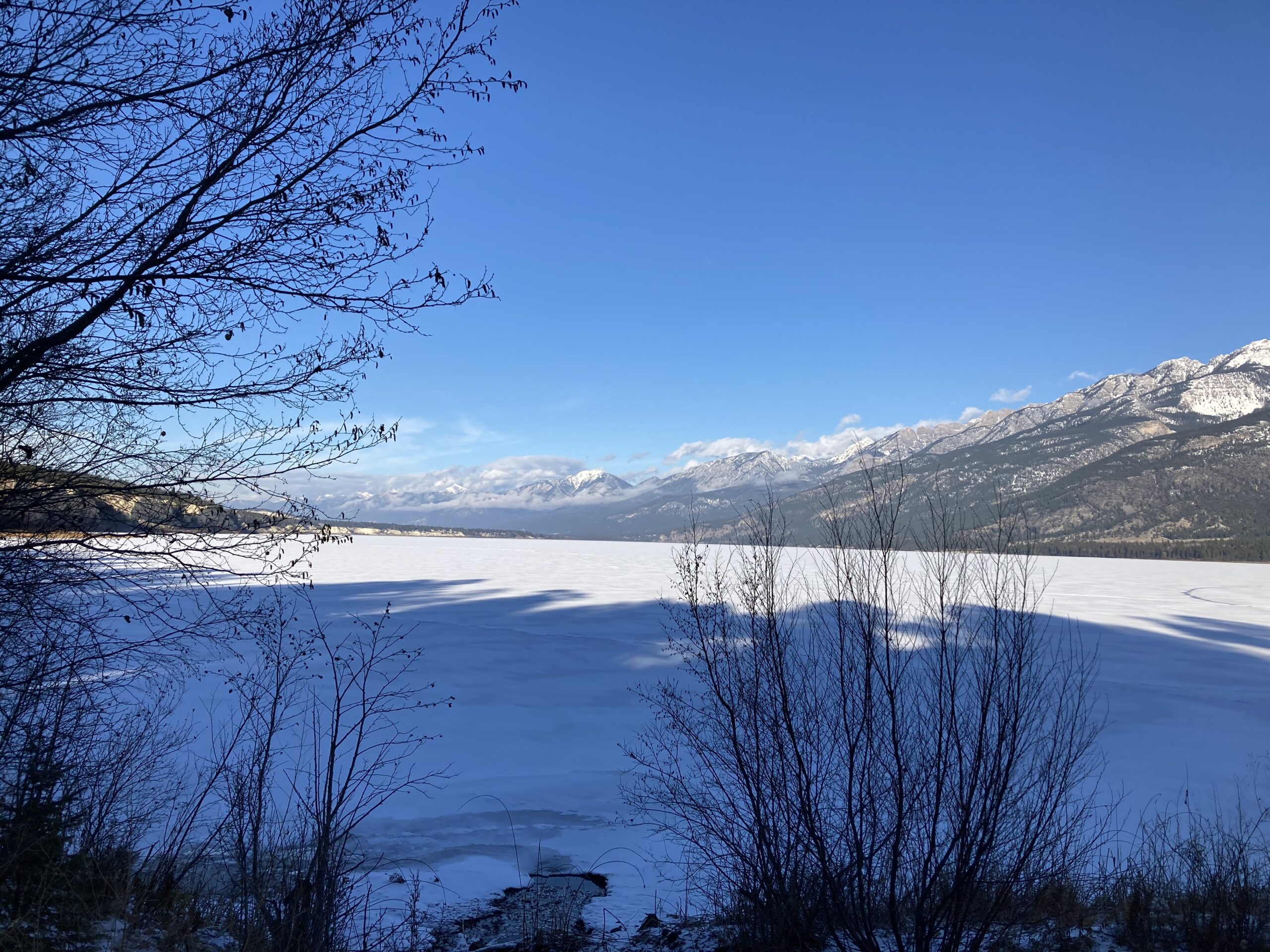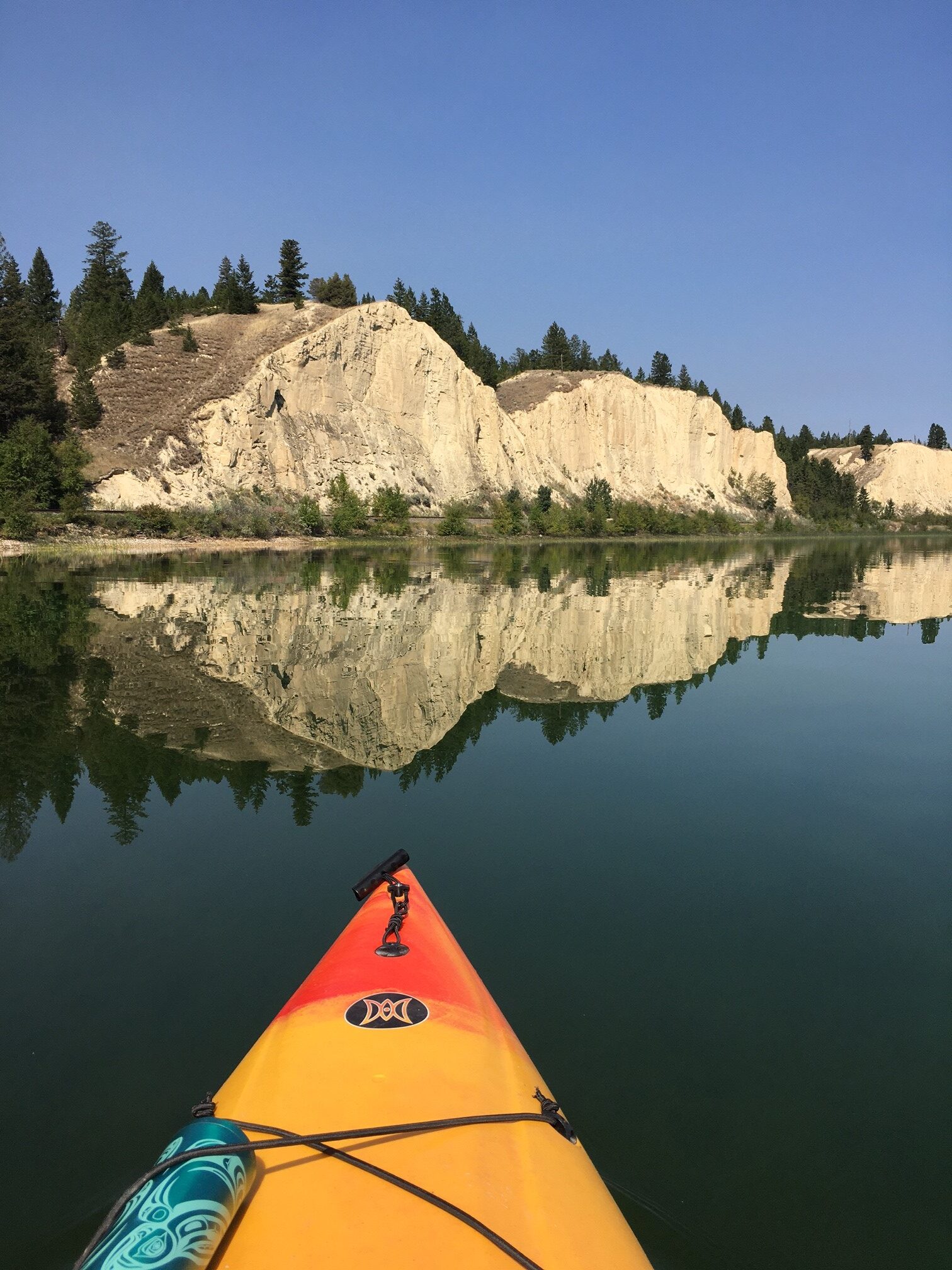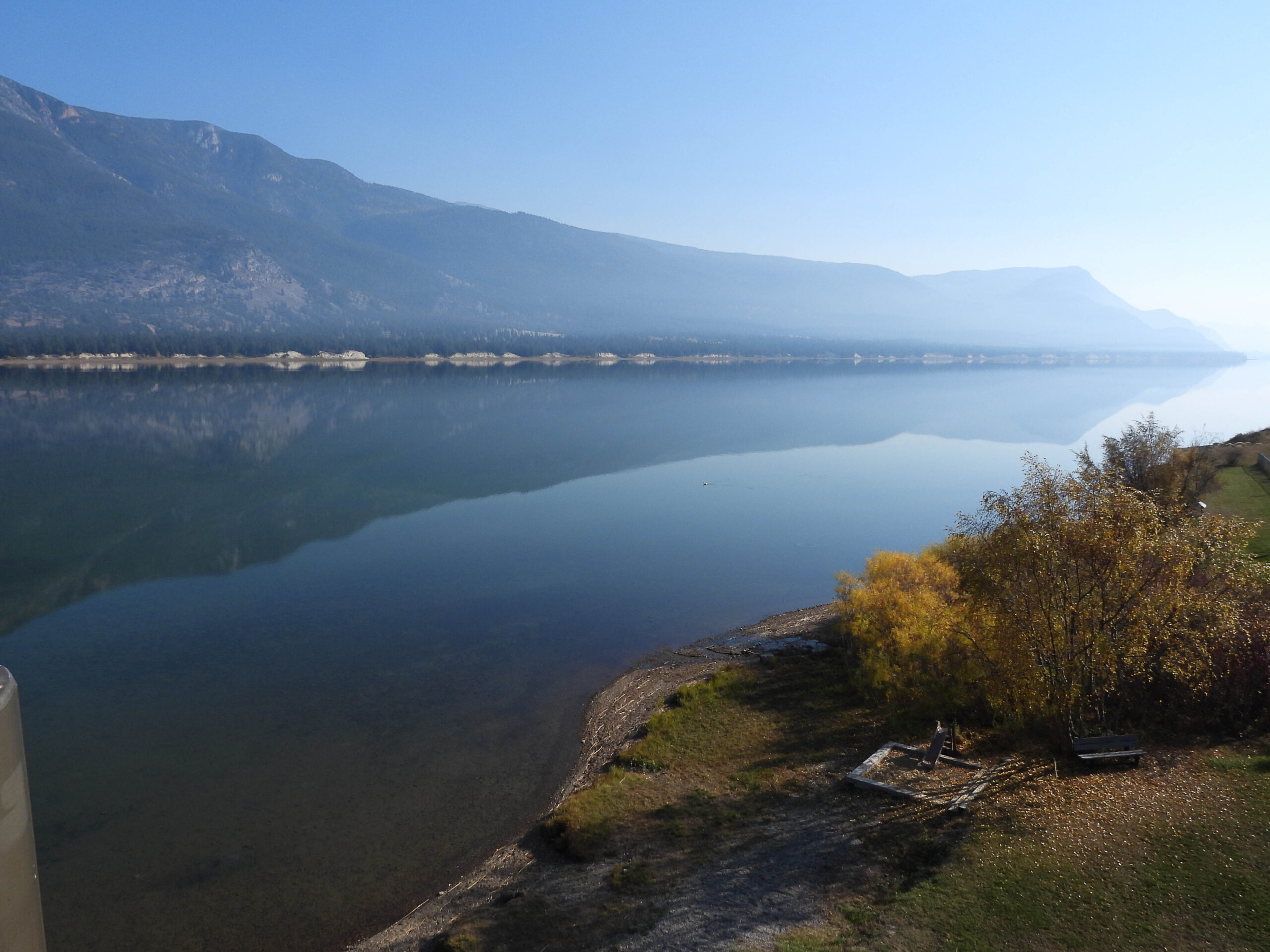
If you’ve ever driven south on Highway 93/95 past the resort community of Fairmont Hot Springs, you understand what it’s like to be struck by the awe-inspiring sight of Columbia Lake.
Said to be the largest warm water lake in the East Kootenay region, Columbia Lake forms the headwaters of the Columbia River. The lake is an important staging area for migratory birds, and its east shore is largely pristine and provides vital habitat for many species. Known for its tranquil and uncrowded waters, Columbia Lake has seen an increase in recreational users in recent years, accompanied by an increase in demand for residential and recreational properties. The Columbia Lake Stewardship Society (CLSS) is working to preserve the lake’s ecological health amid its growing popularity.
“The biggest issue facing the lake is development pressures,” said CLSS chair Nancy Wilson. “Everybody loves it and more and more people want to be on it and using it. And the concern is there’s only so much lake, there’s only so much water, there’s only so much habitat. CLSS envisions Columbia Lake becoming an example of the balance that can exist between the needs of the community and the environment.”
The CLSS was founded almost 10 years ago and Nancy became involved a few years later, first as a volunteer, then as co-chair, then as chair, a volunteer position she’s held for about five years now.
A retired geologist, Nancy is passionate about Columbia Lake and took an interest in CLSS because of their water quality work.
“I was just very impressed with how CLSS is gathering data which they’re sharing with everybody and trying to take that data and figure out what’s happening with the lake and also educate people about water quality and water quantity as well,’ she said. “I liked their science-based approach and because I have a science background it kind of fit my wheelhouse.”
Originally from Ontario, Nancy has a BSc in Earth Science from the University of Waterloo, and a Masters in Geology from the University of Saskatchewan. She moved to Alberta where she began a career in the oil and gas sector, and though kids and grandkids keep her tied to Calgary post-retirement, she and her husband (Tom Dance, a retired hydrogeologist) spend as much time as possible at their home in Spirits Reach, one of the communities on Columbia Lake.
“I also got involved in CLSS because Columbia Lake is such an amazingly special place. It’s so undeveloped and beautiful, and so much about it I would like to leave for my grandchildren and beyond, so they get to see that as well,” she said. “I wanted to use my skills to help protect it.”
As chair of the CLSS board, Nancy’s role is comparable to a part-time job. She tends to invest anywhere from 20 to 30 hours a week, and prior to the CLSS hiring a full-time program coordinator, her time commitment was even higher.
“At this point we are very much a working board. We’re trying to transition more to a governance board now that we do have a long-term employee, but the board has always very much been hands on,” she said. “I find my role is to be a liaison between our really knowledgeable science-based volunteers and people who don’t have as strong of a science background, and trying to get everybody speaking a common language.”
The most recent project the CLSS has been involved with is the Columbia Lake Management Plan that was recently released by the Regional District of East Kootenay (RDEK). The new plan replaces the old one, which dates back to 1997, and is meant to help local government officials and the public understand the key issues associated with the lake and guide decision making. It contains upward of 60 recommendations.
“CLSS is mentioned at least 10 times in the lake management plan, in terms of recommendations, so we are part of that plan. And through the process we received a lot of comments that what we do, particularly in terms of education, is considered really valuable,” Nancy said. “CLSS has been in contact with RDEK and will be in contact with the Village of Canal Flats to talk about how the recommendations can be implemented so they’re just not words on a page.”
With the plan completed, CLSS is beginning to plan for next year’s summer season with the goal to collaborate more with other conservation groups such as the Lake Windermere Ambassadors, Living Lakes Canada and the Columbia Wetlands Stewardship Partners in terms of sharing data and resources. Their base program of monitoring lake water quality and water quantity in the lake’s tributaries will continue, as will their public outreach and education. This includes outreach to First Nations, free summer camps at Tilley Memorial Park and in some of the communities around the lake, setting up tents at Tilley Memorial and the takeout spot in Fairmont to hand out brochures and talk to the public, and educating local influencers.
They’re also looking to expand their water quality monitoring onto the Columbia River.
“So we will take a sample right at the northern end of the Columbia Lake then another at the other side (north) of the golf course because that is such a heavily used part of the river and we want to start documenting and understanding the implications of that heavy usage to the water quality of the river,” said Nancy. “A CWSP study on river usage showed there’s at least 10,000 people a year who go through that stretch, it’s huge.”
“Most people, from what I’ve seen, care about the lake,” she said. “They want to have fun, they want to be able to recreate on the lake, but if they learn about it, they’re more than willing to do it in a way that’s not going to hurt it.”
Photos by Nancy Wilson