

Braydi Rice has worked as a biologist with Shuswap Band since 2020 and moved into her role as Territorial Stewardship Director this past April. As the first staff biologist hired by Shuswap Band, she has witnessed considerable growth in staff – now they employ six biologists across the Territorial Stewardship department.
Having lived most of her life in Invermere, Braydi is very happy to be back home and raising her family here. She finds immense satisfaction in involving her children in Kootenay outdoor experiences like fishing, hiking, and exploring the Columbia Valley.
Braydi completed her degree in biology at Memorial University in Newfoundland, where she found the sense of community that she valued from growing up in the Kootenays. She brings that sense of community and collaboration to her work with Shuswap Band.
“Without collaboration it’s very difficult to do our work efficiently – there are a multitude of ways that we rely on and require collaboration. Whether it’s around shared funding opportunities and developing relationships with another group, government, or an NGO (non-government organization) or providing letters of support for the various stewardship initiatives. Collaborating with partners is an integral and key part of our work.”
Braydi also joined Kootenay Conservation Program’s (KCP) Board of Directors in 2020 (in between parental leaves) and speaks to the positives of the collaboration between KCP and Shuswap Band.
“It’s been a beneficial partnership that has created many opportunities; for example, to get our Guardian Program off the ground. Funding through the Columbia Valley Local Conservation Fund (which KCP helps to administer on behalf of the Regional District of East Kootenay) provided some of those initial opportunities for people to get out on the land and see some of the stewardship work happening locally. It was so valuable to start that learning process and then develop our own ways of doing it by learning from others. Being involved on the KCP Board has given me many ideas to further our projects and support other organizations’ work too.”
While new to the position of Territorial Stewardship Director, Braydi is finding a balance and is excited about the projects that are underway. “It’s exciting to be exposed to all the different areas within the territory where we are working on stewardship. I am grateful to Manon Moreau, who was the Director before me; it’s nice to have her guidance, support and mentorship.”
In her role, Braydi supports a diversity of projects, some of which she worked on previously in her biologist role.
“Many important projects are happening within the department, that I am able to support our staff with. Our wildlife team has been working on species at risk work which Shuswap Band has been involved with for years; however, more recently, we have been able to manage these projects in-house, which speaks to our capacity and growth. Ungulate and sheep work have been a priority for the Shuswap Band, with the Radium Wildlife Overpass being a huge project over the last few years.”
Braydi explains that she sits at many tables to represent the interests of Shuswap Band in their territory. “I am sitting, supervising or supporting, depending on the project.”
Now that Shuswap Band has two senior fisheries biologists, Scott Cope and Nate Medinski, who lead their own projects, Braydi can provide additional support and insights.
For example, Braydi has been involved with the Columbia River Salmon Reintroduction Initiative (CRSRI) over the years. “The CRSRI work is ongoing, with five governments working together. The three Nations (Syilx Okanagan, Secwépemc, and Ktunaxa Nations) have each taken responsibility for different aspects, but collaborate on all the technical work. The other big fisheries work being done is the Upper Columbia Native Species Population Assessment and Telemetry Project. It is fantastic to have Nate (Medinski’s) expertise and excitement come into this work. I’m really excited to see the information and data coming out of this project.”
Braydi is also brimming with excitement and pride about the salmon release and the Fish in Schools program, which involves field trips with fisheries biologists, as well as the Shuswap Band leadership, cultural department, and guardians.
“This program was started by the Okanagan Nation Alliance (ONA) over 20 years ago. We heard about the program’s successes and wanted to boost education around salmon in the Columbia River within the East Kootenay, so we asked if we could take that work and bring it into the schools here. We started two years ago with Windermere Elementary and McKim Middle School in Kimberley, our first two pilot schools. It went so well that we expanded into two secondary schools this past year, in Invermere and Golden. We have had nothing but positive feedback from teachers, schools, kids, and parents, and we’re hoping to continue forward with this. We are very thankful for ONA’s support in being able to provide all the fish, as well as the support and advice from their decades of experience and learning.”
Growing up in the Columbia Valley, Braydi has strong memories of learning about the Kokanee salmon as a young child in school, and from field trips to Abel Creek. Nonetheless, her path to becoming a fisheries biologist was a circuitous journey.
She originally began her studies at Dalhousie University in Nova Scotia and was planning to go into the medical field. During the required field biology courses, she discovered her future path. “I found I enjoyed myself more being outside in nature, and it suited my mental health so much better than studying human biology inside a lab. When I figured that out, I was entering my third year of university, and I ended up doing a complete 180-degree change in my courses. By then I was studying on the east coast of Newfoundland where there were so many opportunities for coastal and fisheries studies, so it felt like a natural place to fall into this work.”
She also credits a summer student internship with the Nature Conservancy of Canada (NCC) back home in the Columbia Valley as providing inspiration. “NCC gave me my first opportunity to see if I liked this type of work, and it solidified for me that I had chosen the right direction.”
Working on these initiatives with Shuswap Band, Braydi now has no doubts that she is on the right path. When she sees the joy of kids and youth at a salmon release celebration, she is reminded of how special this area’s natural environment is and how lucky she is to be able to experience this and live here.
“I think that’s why I speak so highly of the Fish in Schools program and I get so passionate about the salmon releases – because we get to see kids experience that amazement for the first time. That’s such a key part of Shuswap culture. The second line in our Vision is ‘Our children are the future’ and that really says it all.”

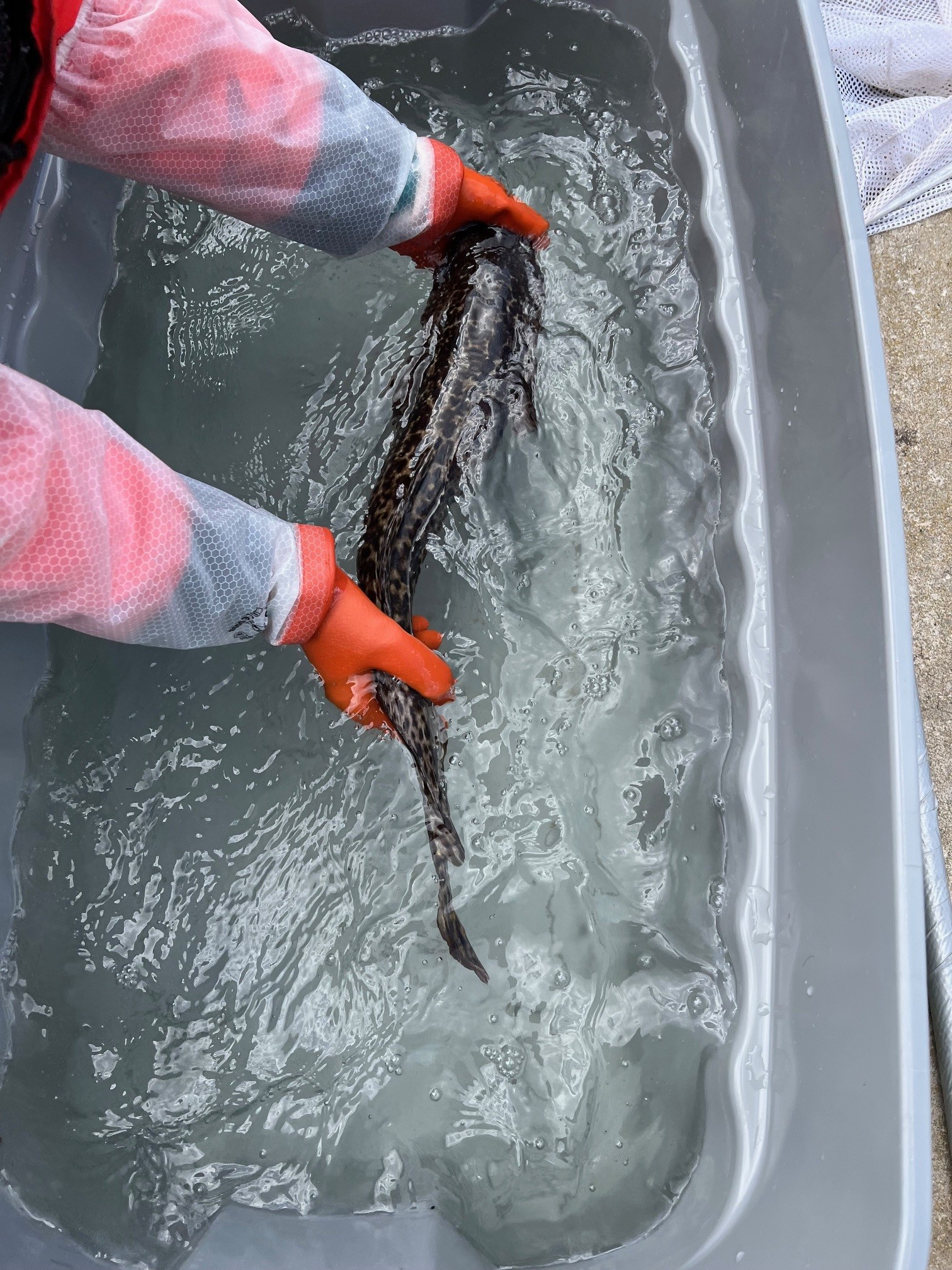


Photos: Braydi at the Shuswap Band Ceremonial Salmon Release 2023 (Shuswap Band photo); Burbot Population and Tracking Study with the Province of BC (WLRS) on Columbia Lake 2023; Columbia Headwaters Aquatic Restoration Secwépemc Strategy (CHARS) work at Fraling Creek 2020; Salmon Festival 2023; Fish in Schools (FinS) First Release 2024 at the boat launch of Lake Windermere; FinS set-up at pilot school Windermere Elementary 2024 (Braydi Rice photos); Dutch Creek from helicopter flight during work for the Upper Columbia Native Species Population Assessment and Telemetry project (Nate Medinski photo); Drumming at MMIW March 2024 (Braydi is on right side); Territorial Stewardship temperature logger 2025 at Columbia Lake: part of the Upper Columbia Native Species Population Assessment and Telemetry Project (Braydi Rice photo).


