Considering Indigenous Priorities and Data Sovereignty in Community Science
#5. Considering Indigenous Priorities and Data Sovereignty in Community Science
Date: Thursday, February 25 at 12 pm PT / 1 pm MT.
Presenters
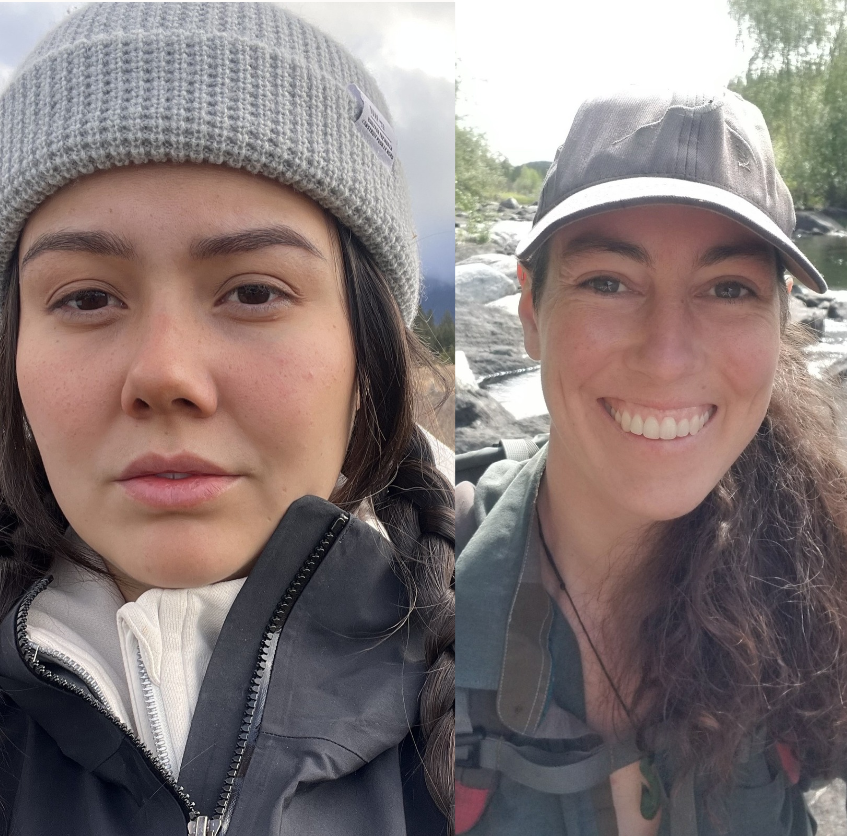
Enola Eugene, Shuswap Band, and Erin Tattersall, University of British Columbia
Enola is the Shuswap Band Culture and Heritage Coordinator and Community Member
Erin’s research explores the intersection between ‘big data’ approaches to wildlife monitoring and Indigenous stewardship priorities in collaborations between Western scientific researchers and Indigenous groups. She works within the context of the Northwest Territories Biodiversity Monitoring Program (NWTBMP), a multi-collaborator initiative that uses remote cameras and acoustic recorders to monitor wildlife communities across the Northwest Territories to understand rapidly shifting habitat conditions under anthropogenic climate change. Erin lives in Nelson, BC.
Enola Eugene, a community member and the Culture and Heritage Coordinator for the Shuswap Band in Invermere, works with community members to record traditional use values throughout Secwépemc Territory (Secwepemcúl’ecw). She does this, in part, so they can be better protected. When collecting data within Indigenous Territory, there are important considerations that can affect the resources valued and cared for by Indigenous communities. Enola will explain how open-source data can harm traditional use values and what to consider before sharing information to open-source platforms. She will also describe the Shuswap Band’s processes and protocols for sharing information with the broader community, and outline appropriate ways to connect with the Shuswap Band and other bands.
Erin Tattersall will review current challenges and opportunities in bringing Indigenous data sovereignty (IDS) and open data together in collaborative wildlife conservation. In the current data-driven landscape of wildlife conservation, data sovereignty is fundamental to determining how knowledge is created and applied to pressing biodiversity concerns. Many Indigenous Peoples stress the importance of IDS to assert Indigenous rights over Indigenous data. Western science increasingly champions open data to make data more accessible. Erin will provide recommendations to navigate potential tensions in collaboration, stressing the need to focus on relationship-building, support Indigenous data governance, and to proactively discuss data stewardship expectations.
Featured Resources