
Awarded to BC Wildlife Federation to enhance the hydrologic resilience of historic beaver complexes using low-tech beaver dam analogues to improve water storage, address stream incision, and increase resilience to climate extremes.
PROPONENT: BC Wildlife Federation
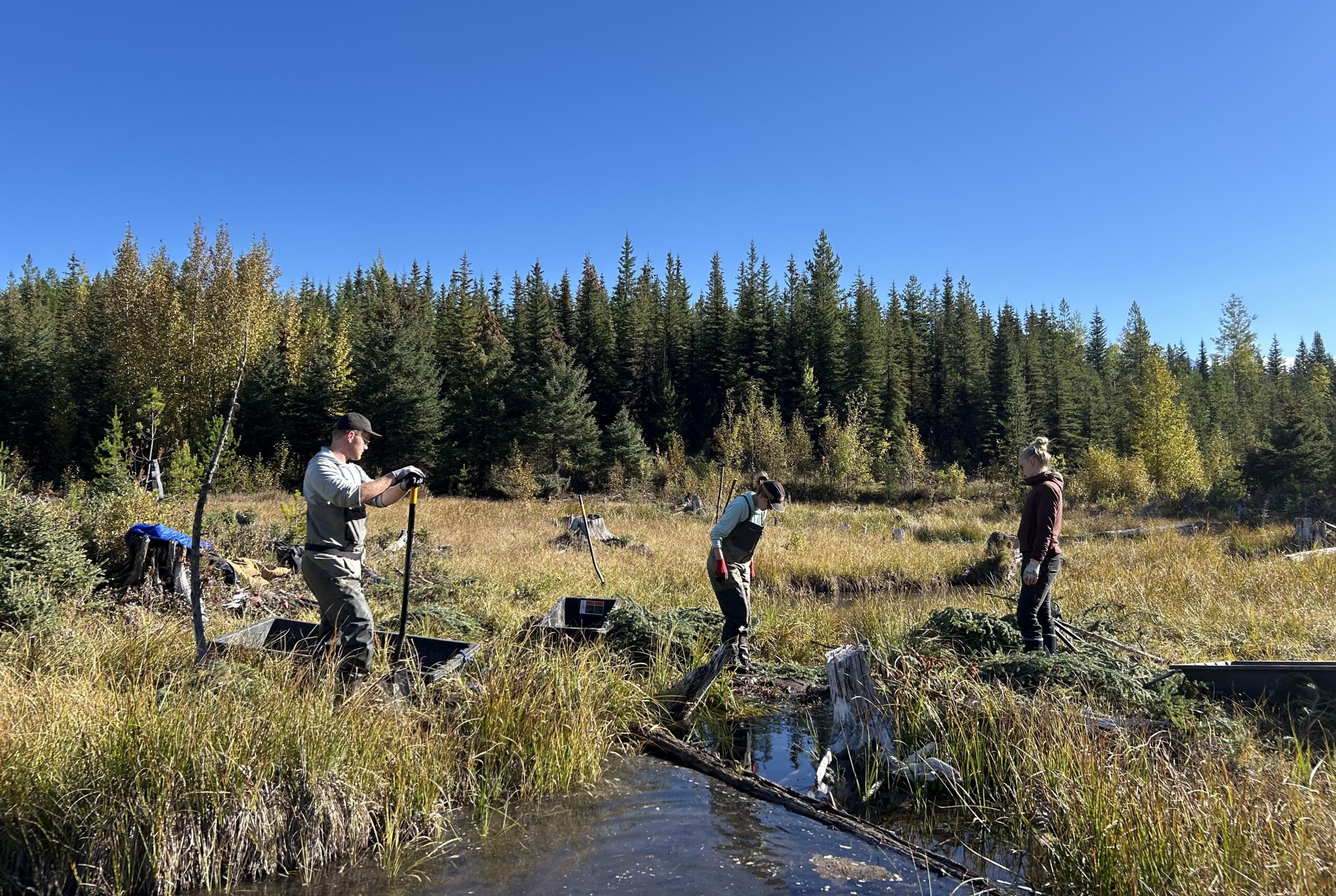
BC Wildlife Federation Photo
DESCRIPTION: Led by the B.C. Wildlife Federation (BCWF) in partnership with the ʔakisq̓nuk First Nation and Shuswap Band, this project focuses on two restoration sites located on Crown land near Invermere and Canal Flats. Efforts will enhance water storage and floodplain reconnection, strengthen habitat, and build community resilience to climate change. By repairing beaver dam complexes that once defined this landscape, the project helps ensure a future where both people and wildlife have reliable access to clean water resources and thriving ecosystems. Beyond ecological restoration, this project delivers meaningful local and cultural benefits. Elders from the Shuswap Band originally identified Windermere Wells as a priority restoration site, highlighting concerns about increased sedimentation and the infilling of critical downstream wetlands.
OBJECTIVE: The project’s overarching goal is to enhance the hydrologic resilience of historic beaver complexes using low-tech beaver dam analogues (BDAs) to improve water storage, address stream incision, and increase resilience to climate extremes.
Specific project objectives are to:
- continue to build relationships with local partners and work on the early stages of project planning including detailed site design, baseline monitoring and permit applications;
- implement these two project sites, building approximately 15 BDAs at Windermere Wells with Shuswap Band and 15 BDAs at Bear Lake Tributary with ʔakisq̓nuk First Nation;
- conduct baseline monitoring to document existing site hydrology, channel condition, and wetland;
- once implemented, conduct monitoring at least twice annually, during peak and low flow periods, to assess BDA function, maintenance needs and hydrologic response in collaboration with project partners; and
- provide opportunities to share knowledge and build local capacity to sustain restoration efforts.


