
Awarded to West Kootenay Watershed Collaborative Society to demonstrate how climate change and forest disturbance will affect watershed stability and health, thereby reducing risk to human and wildlife populations.
PROPONENT: West Kootenay Watershed Collaborative Society
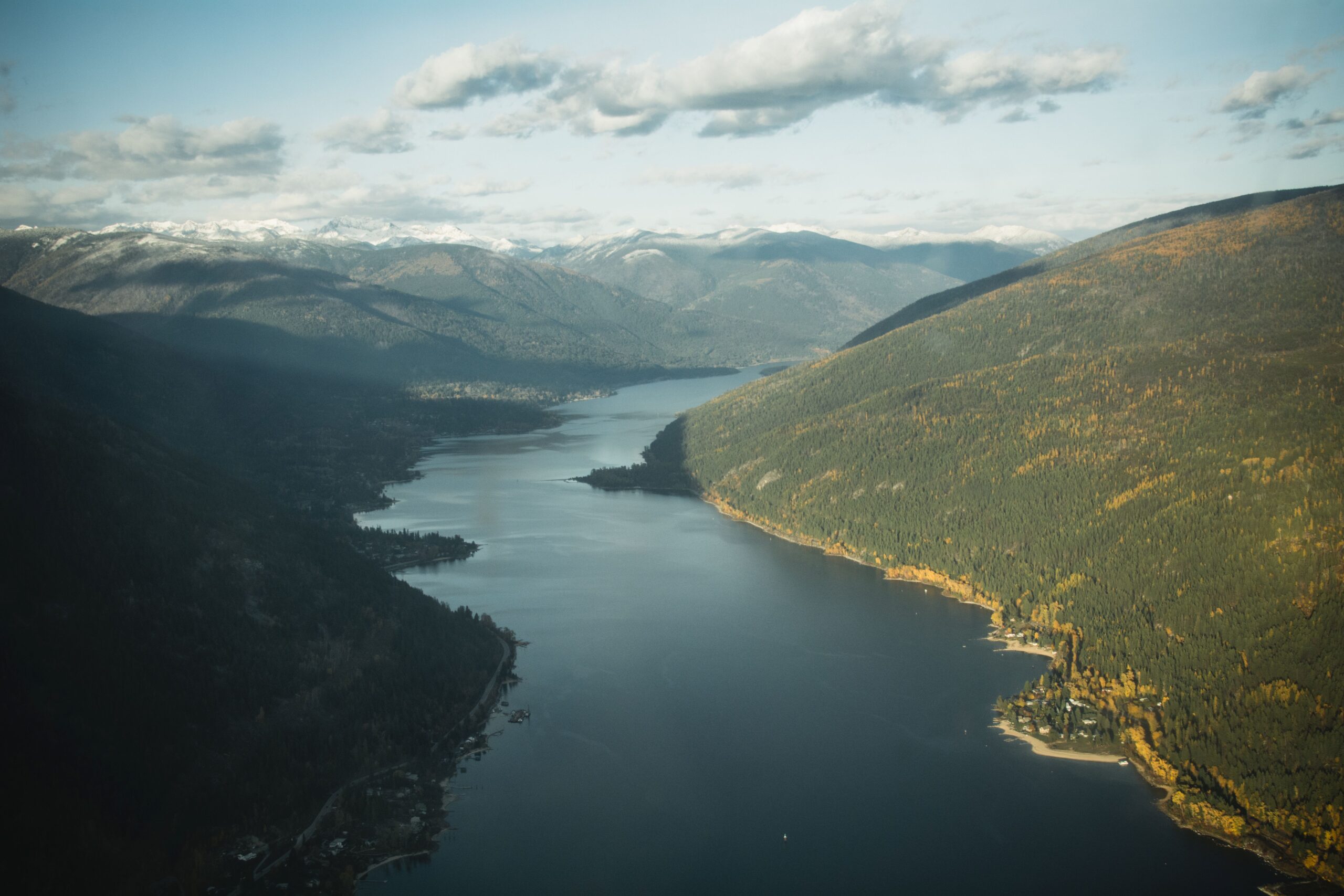
Janneke Guenther Photo
DESCRIPTION: Communities depending on forest ecosystems for vital services, from drinking water and agriculture to wildlife habitat and climate mitigation, need comprehensive data. Using innovative science, the project will demonstrate how climate change and forest disturbance will affect watershed stability and health, thereby reducing risk to human and wildlife populations. The study area contains pockets of instability on steep slopes within and above densely populated residential areas. Historically, timber harvesting metrics have been used exclusively to assess risk, measuring tolerance by the amount removed from the forest rather than what should remain to sustain ecological processes. Previous work by the Community in Nature project, hosted by Neighbours United, has identified species of concern in the watershed, including the northern goshawk and whitebark pine. As the project assesses hydrological risk to forest values, these habitat areas will be integrated into resultant models.
The project will use two watersheds (Laird and Redfish Creeks) to identify how forestry should be planned in the future using practices such as selective tree logging, small patch cutting, shelterwood practices, and retention of different rates, under a changing climate. New data will be compiled and utilized to complete Nature Directed Stewardship Plans (NDSP) for community negotiations in both creeks.
OBJECTIVE: Using innovative science, the project will demonstrate how climate change and forest disturbance will affect watershed stability and health, thereby reducing risk to human and wildlife populations.
Specific project objectives are to:
- collect and analyze all necessary and existing hydrologic data from original sources for modeling at Laird Creek;
- conduct quality checks for all datasets to ensure reliability in subsequent hydrologic modeling;
- examine forest roads in the Laird Creek watershed, verify the network of roads, bridges, and GPS pipelines, and confirm connections with the stream network;
- reconstruct the last 50 years of forest cover history using the VRI database and appropriate growth models;
- compile stand-level mass and energy balance data for testing and calibrating hydrologic models at Laird Creek;
- develop and test the Distributed Hydrology Soil Vegetation Model (DHSVM) hydrology model for Laird Creek and continue to update and recalibrate the Redfish Creek model to reflect new roads and logging activities since 2000;
- develop long-term climate data to represent various future scenarios, and design management scenarios for future land use and forest cover;
- run hydrologic models to simulate flow regimes under historic and projected climate conditions, cross-compare management scenarios, and analyze impacts;
- and evaluate future land use and cover management options for environmental protection, community livelihood, flood risk mitigation, and carbon sequestration.


