

Bat conservation depends on both science and community engagement. As Project Coordinator of the Kootenay Community Bat Project (KCBP) since 2021, Elodie Kuhnert works with landowners, volunteers, and local governments to promote informed, bat-friendly practices across the region — helping ensure a stronger future for local bat populations.
She began working with KCBP in 2018, and now conducts 20 to 30 site visits each year while overseeing project coordination across the region.
“I really enjoy what I do. I love working with people because the interactions are almost always positive. The Kootenays are a huge area, so I travel frequently, and I’ve trained two people in the East Kootenay to assist with site visits—one of them is based in Golden.”
KCBP help provide bat boxes to landowners with significant colonies that need to be moved. Elodie emphasizes the importance of installing at least two boxes with varying sun exposure so bats can regulate their temperature. She also sometimes suggests using BrandenBark™ (a synthetic material used to mimic natural bark and create artificial roosts for bats) and connects interested landowners with Wildlife Conservation Society (WCS) Canada’s Western Bat Program.
Elodie is supported by individuals called Bat Ambassadors, who lead public education and outreach, organize bat counts, and assist with guano collection. For example, Elodie and Bat Ambassador Andrea McKenzie deliver training sessions throughout the West Kootenay. The program includes introductory training for volunteers to lead bat counts and share information with the public, as well as a more in-depth course for those who wish to become Bat Ambassadors. In the East Kootenay, other Bat Ambassadors also lead bat count workshops, particularly in Golden and the Columbia Valley, where several ambassadors are actively involved.
Elodie notes that “These workshops are for all ages! Younger volunteers can help with the annual Bat Count and later join Bat Ambassador training if they want. A Selkirk College student has been doing social media and bat outreach, which is great for reaching a younger audience.”
She emphasizes the need for a reliable core group of trained volunteers to sustain consistent outreach and annual events such as the bat count. To that end, a key priority of KCBP is strengthening their volunteer and ambassador network.
Elodie is also working to ensure pest control companies adopt bat-friendly practices.
“Some people call pest control because they don’t realize bats are not pests. Unfortunately, not all pest control companies are well-informed about bats. One Cranbrook based company is very knowledgeable, and I’ve been able to collaborate with them on some site visits because they can help with the safe exclusion of bats from buildings. It’s a natural extension of the work I’m doing, which is really cool.”
She encourages companies to complete an eight-hour online training course offered through WCS Alberta and hopes it will become standard training for new staff, ensuring safe and humane management of bats in buildings.
At a broader scale, Elodie is working with KCBP’s umbrella program, BC Bats, to pursue Bat Friendly Community status at the regional district level. “If we are successful with receiving funding, we will start by reaching out to regional districts. I think the City of Nelson can achieve this too, in the next few years.”
To earn this designation, communities must protect and create bat habitat and support Bat Ambassadors in providing public education and outreach efforts.
“We are already meeting these criteria in the Columbia Valley and the Regional District of Central Kootenay (RDCK), where we have received funding through Local Conservation Funds.”
Elodie hopes to begin the application process in the Regional District of Kootenay Boundary (RDKB), where communities such as Christina Lake have expressed interest.
Collaboration is central to her work. She partners with landowners, volunteers, regional districts, and organizations, including WCS Canada, who have a larger focus on research. Sharing knowledge is part of that effort, including an annual presentation on local bat species and research at Kokanee Creek Provincial Park near Nelson.
Elodie also recommends KCP’s Stewardship Solutions Toolkit to landowners. “When the Toolkit first came out, I thought it was amazing. If landowners have other wildlife concerns, or want to plant more native species, manage invasive species, etc. – the Toolkit is a great resource.”
Elodie grew up in Switzerland, where she completed her undergraduate and master’s degrees. Her interest in bats began when her zoology professor invited students to assist with fieldwork; he already had several master’s students studying bats in caves.
“The field work in a cave was so interesting, I loved it! It was all so new, and I was curious to learn more; I didn’t know anything about bats. They’re mysterious, active at night, and really cute when you see them up close.”
Elodie was hooked, and when it was time to choose a master’s topic, she asked if he wanted to take on another student. “Because I had done that fieldwork, and not everyone had, I was chosen for it. My Master’s thesis wasn’t in caves; I was capturing bats in forests and trying to find their roosts. My question was: how often do they change roosts, and how do they select them?”
After moving to BC, she connected with local bat biologists and describes the experience as being ‘in the right time at the right place.’ Just three days after arriving in the West Kootenay, she attended a bat capture night in Creston to identify species using a bat condo. There she met Cori Lausen, Leigh-Anne Isaac, and Juliet Craig, and was soon hired to assist with fieldwork.
From caves in Switzerland to bat condos in Creston, Elodie Kuhnert’s journey has been shaped by curiosity, collaboration, and a deep respect for these often-misunderstood animals. Through KCBP, her work now extends beyond research into backyards, classrooms, and regional districts across the Kootenays. By enhancing bat habitat, training ambassadors, and supporting landowners, she’s helping communities appreciate bats as essential neighbours who provide important ecosystem services. With strong partnerships and growing volunteer support, the future for bats in the region is looking brighter than ever.
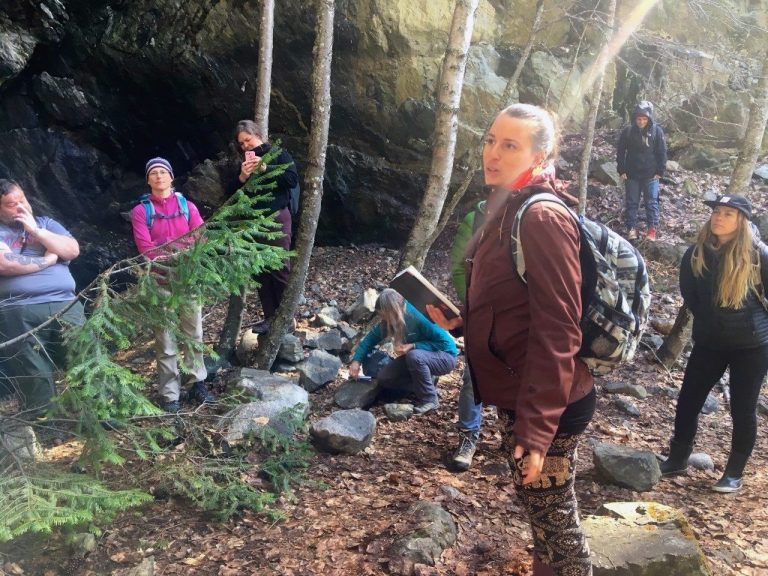
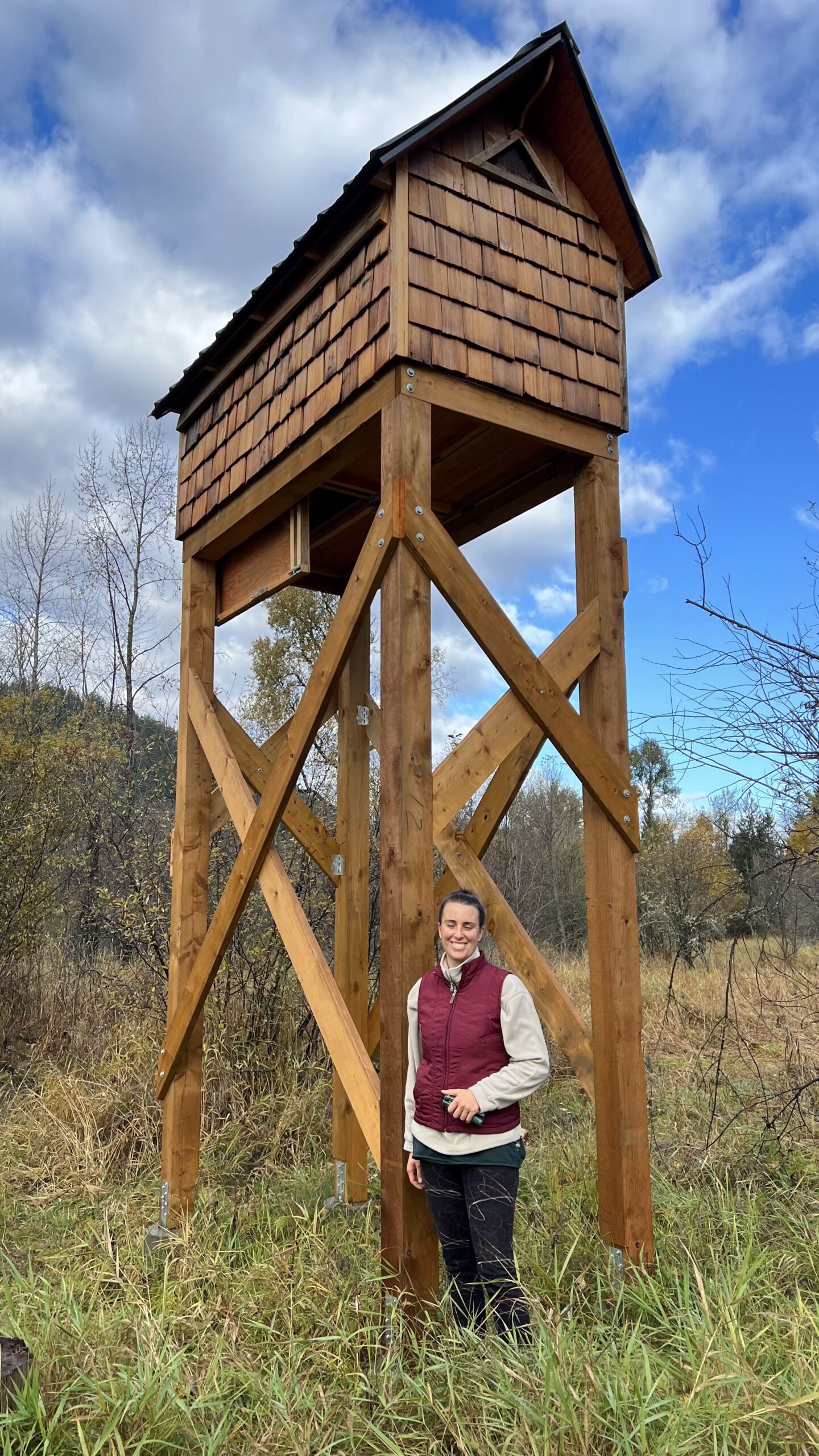
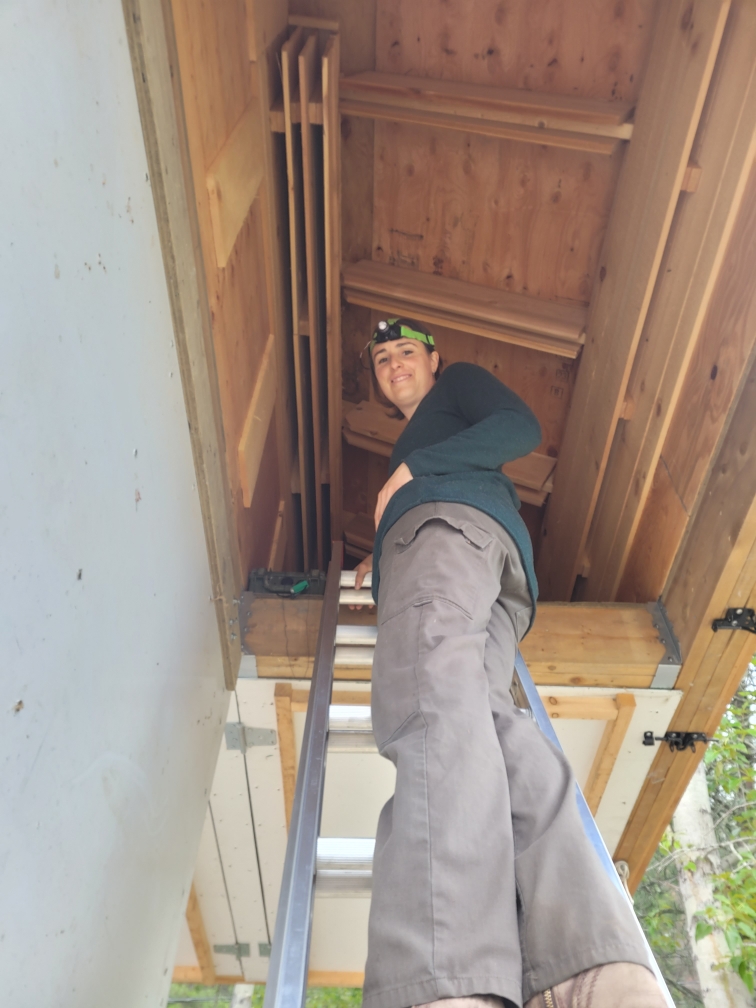
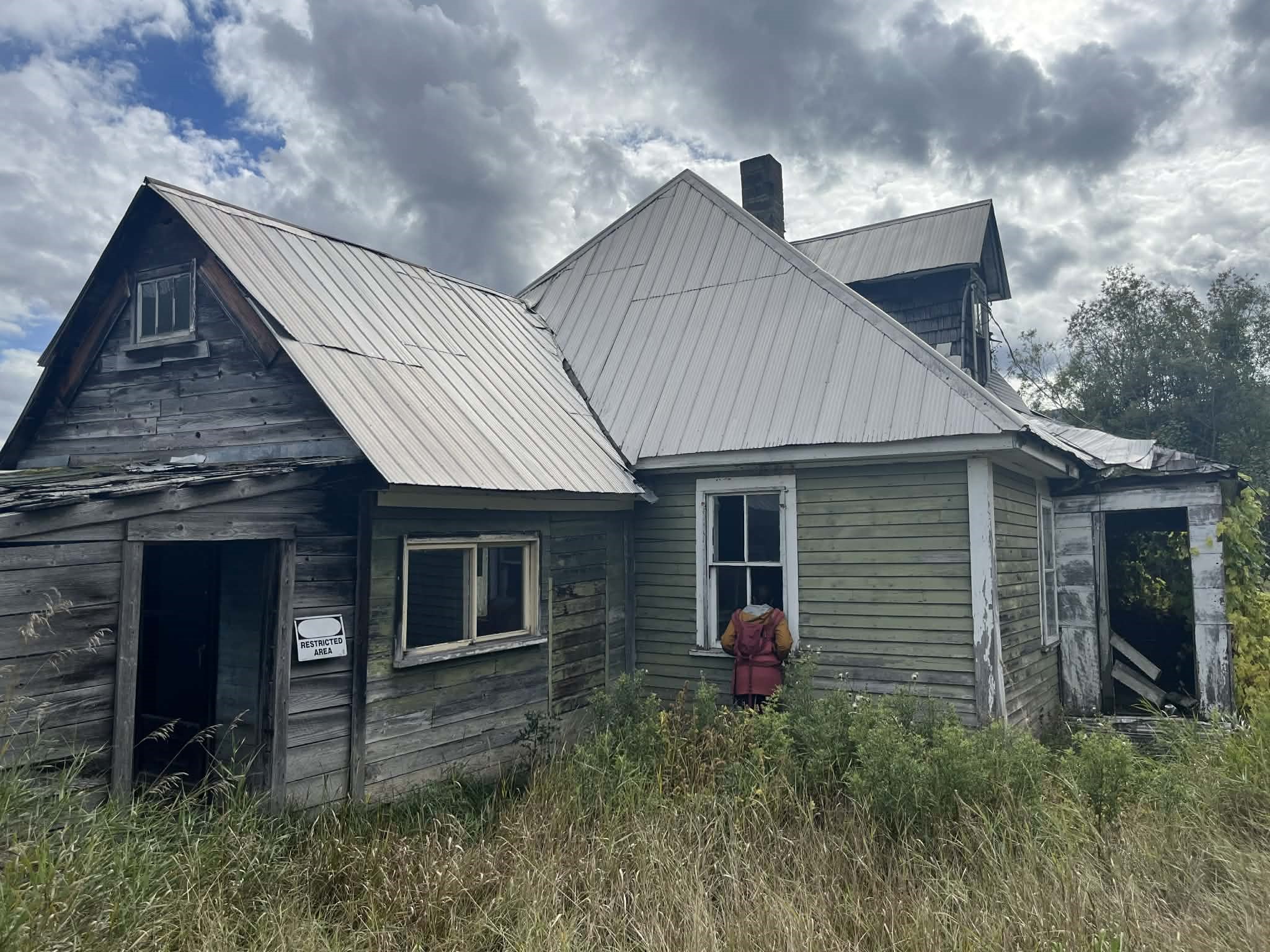
Photos: Elodie giving a presentation about bats at Queen Victoria Mine; Conducting fieldwork at Pondside Bat condo in Crawford bay and at Kuskanook Bat chalet; Observing roosting habitat for hundreds of little brown and Yuma bats, at Nature Conservancy of Canada’s (NCC) Morrisey Meadows conservation property, October 2025. Megan Jamison photo.


