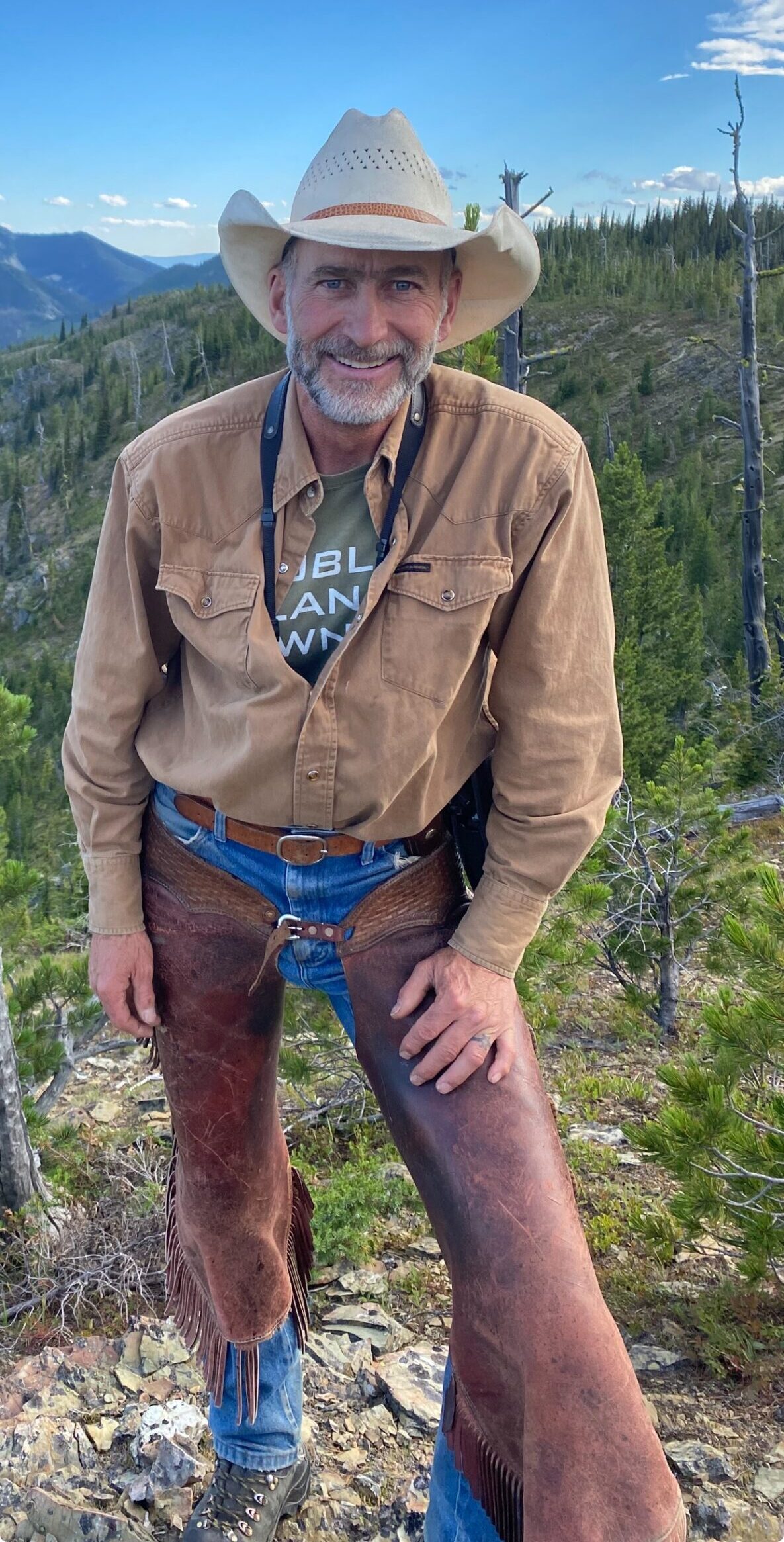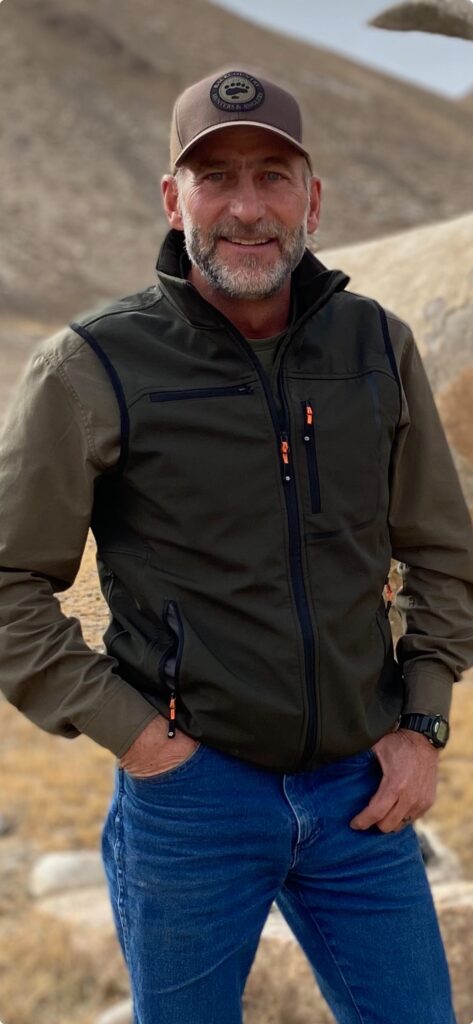
Elk Valley resident Bill Hanlon is a longtime wilderness advocate whose work has helped shape conservation efforts at the local and national level. As one of the early Canadian members of the Backcountry Hunters & Anglers (BHA), he co-founded the BC Chapter in 2014, launching BHA as an international conservation organization.
He had already co-founded the Hornaday Wilderness Society in 2000. The spark for this group began in the early 1990s, when CFI/TEMBEC, the local forestry company at the time, created the Elk Valley Integrated Forestry Task Force. While sitting at the table with various local stakeholders, which he describes as “an early or unofficial land use planning process in the Elk Valley,” Bill and others realized that “a wilderness advocacy group was missing at the table.”
Together with Al Freeze, Bill launched the Hornaday Wilderness Society, named after American conservationist William T. Hornaday, who came to the Elk Valley in 1905 to hunt, study and collect specimens for the Smithsonian and the Carnegie Museums, as well as the New York Zoological Park. Hornaday wrote the book “Campfires in the Canadian Rockies”, which is a historical document of the Elk Valley at that time. Hornaday was also successful at lobbying the provincial legislature to create the Elk River Game Reserve as an Order in Council that stood from 1918 until 1963.
Bill emphasizes that the mandate of the Hornaday Wilderness Society is “to perpetuate the conservation efforts of its namesake in the area known as the Hornaday Wilderness. The area is the same today as it was when Hornaday was here 120 years ago. Brule Creek, which Hornaday called Avalanche Creek in his book, is the last roadless drainage in the entire Elk Valley outside of Height of the Rockies Provincial Park. How it survived 120 years of extreme resource extraction, particularly in the Elk Valley, which is the most industrialized valley in BC, is amazing!”
In the early 1990s, Bill and others submitted the Hornaday Wilderness Area as a candidate for protection through the province’s Protected Areas Strategy. The area was designated as a Special Resource Management Zone. He explains that while this designation “doesn’t preclude industry — other values on the landscape, such as conservation values, are taken into consideration.”
Bill is the current Chair of the Hornaday Wilderness Society. This small but effective group has partnership agreements with Recreation Sites and Trails BC and maintains five wilderness trails in the Elk Valley. These trails are managed for a non-motorized, semi-primitive experience to provide sustainable public recreation in a wilderness setting. In keeping with Hornaday’s original means of transport, the trails are managed for access by foot or on horseback.
Bill reinforces the wilderness values of this area: “There are no signs on trees – you’re on your own after the trailhead sign. This is a wilderness area, and we want to keep it a wilderness experience. Our society has managed to utilize Forest Recreation Regulations for conservation purposes to not only provide sustainable recreation but to maintain wilderness values in the process.” For example, they were able to get e-bike prohibitions on all the trails in anticipation of their increasing popularity. “As stakeholders, we’ve managed to be that voice to try to keep the Hornaday Wilderness Area intact and functioning for wildlife and habitat. And so far, we have. It’s constant work, but it’s working.”
Bill describes the Backcountry Hunters & Anglers as a group with similar values to the Hornaday Wilderness Society. BHA is also a “conservation-first organization and is focused on trying to maintain these large wild landscapes with all the predator-prey relationships and as healthy an ecosystem as possible. Our tag line is “The Voice for Our Wild Public Lands, Water and Wildlife.”
He was the first Chair of the BC Chapter of BHA, and is now in his third term sitting on the North American Board of Directors. He is also a Director on the Board of the newly formed BHA Canada, a federal non-profit charity created as a parallel entity to its North American parent organization.
Bill is passionate about the conservation ethic as a pillar of BHA.
“Hunters and Anglers are often the first ones to speak out when there are conservation concerns that need to be addressed – not only concerning huntable or fishable species, but also non-game species. We work closely with The Nature Trust of BC (NTBC), and our BCBHA Chapter tries to do annual work parties on NTBC properties. These boots on the ground projects promote healthy habitat and also meaningful membership engagement.”
BHA promotes the principle of ‘Fair Chase’ in hunting — the ethical, lawful, and sportsmanlike pursuit of free-ranging, wild game, balancing the hunter’s skills and equipment with the animal’s ability to escape.
“I’ve always promoted that the twin virtues of hunting are effort and ethics, because what you want from the hunt largely shapes how and where you hunt,” Bill elaborates. “Fair Chase emphasizes self-restraint and respect for wildlife, ensuring the animal has a fair chance to evade capture and that no unfair advantage is used. To integrate the BHA philosophy with Fair Chase, the more intact the wilderness is, the more authentic the hunting experience.”
Bill describes collaboration as another pillar of BCBHA, which has representation on numerous regional and provincial committees, including the Fish, Wildlife & Habitat Coalition, the Provincial Hunting and Trapping Advisory Team, and the Provincial Chronic Wasting Disease Advisory Team, to name a few. BCBHA also collaborates with numerous conservation and environmental organizations in the province and Bill sits on the East Kootenay Wildlife Habitat Advisory Committee (EKWHAC).
BCBHA’s rule for collaboration is the 80/20 rule. “If we can agree on 80% of the issues and disagree on 20%, then let’s check those disagreements at the door,” Bill explains. “Let’s go into the meeting and discuss that 80% that we have in common. That has been our general mandate with BHA to this day, and it still is moving forward.” BCBHA hosted a Wildlife Management Round Table back in 2017, bringing together First Nations, hunting organizations, and environmental groups to discuss the future of wildlife management in BC.
Bill also appreciates the Kootenay Conservation Program (KCP) network and was a presenter during KCP’s 2025 Fall Gathering field tour, speaking about the importance of conservation lands and connectivity with the intact wildlands remaining in the Elk Valley.
“I recognize that the way we deal with issues has changed, in that we don’t expect the government to solve them for us,” Bill reflects. “Now, organizations collaborate and get stakeholder buy-in, then we approach government as one spoke in the wheel to address the issue. The government is a partner to ensure that the legalities, permitting, and whatever else is needed are there. I think once organizations recognise this, it empowers them to be that much more effective. It takes a lot of work, but it is effective.”
His advice for young people who want to work or volunteer in conservation is to “get involved in an organization so you can amplify your voice, and collaborate with other groups. Conservation is never convenient and is sometimes uncomfortable, yet it is something that makes you a better person. It involves and engages you in something bigger than yourself. If you get more engaged and can speak on behalf of the organization or step up to a leadership position, that’s the only way these organizations can continue to work on behalf of wildlife and habitat in the future.”
In a valley defined by industry, Bill Hanlon has helped ensure that some places remain roadless, wild, and protected for the long term.