

Highlights from Year 1 (2019-20) to Year 7 (2025-26) are listed below.
Year 7 Highlights (2025-26)
Columbia Wetlands Stewardship Partners (CWSP) summarize their Kootenay Connect Priority Places projects over seven years, to support species at risk and their habitats in the Columbia Valley.
Columbia Wetlands Stewardship Partners (CWSP) summarizes their American Badger project, from 2022 to 2026, part of Kootenay Connect Priority Places.
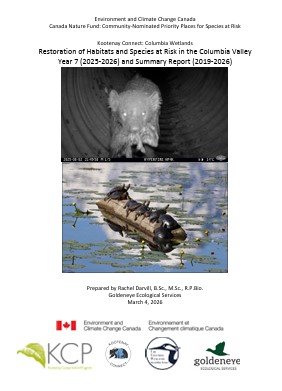
Report: Restoration of Habitats and Species at Risk in the Columbia Valley Final Report Years 1 to 7
From 2019 to 2026, the Columbia Wetlands Stewardship Partners, through the Kootenay Connect initiative, implemented multi-species conservation actions across the Columbia Valley to protect Species at Risk, secure critical habitat, and improve landscape connectivity. These efforts combined targeted habitat inventories, regulatory habitat protection, stewardship actions, and infrastructure assessments to support long-term species persistence in one of BC’s most ecologically significant valley bottom landscapes. Between 2021 and February 2026, a total of 13 Wildlife Habitat Areas (WHAs), representing 718.1 hectares, and 1,258 Wildlife Habitat Features (WHFs)—including 1,255 functional American Badger burrow clusters and three Mountain Goat mineral licks—were approved or submitted to the Province of British Columbia.
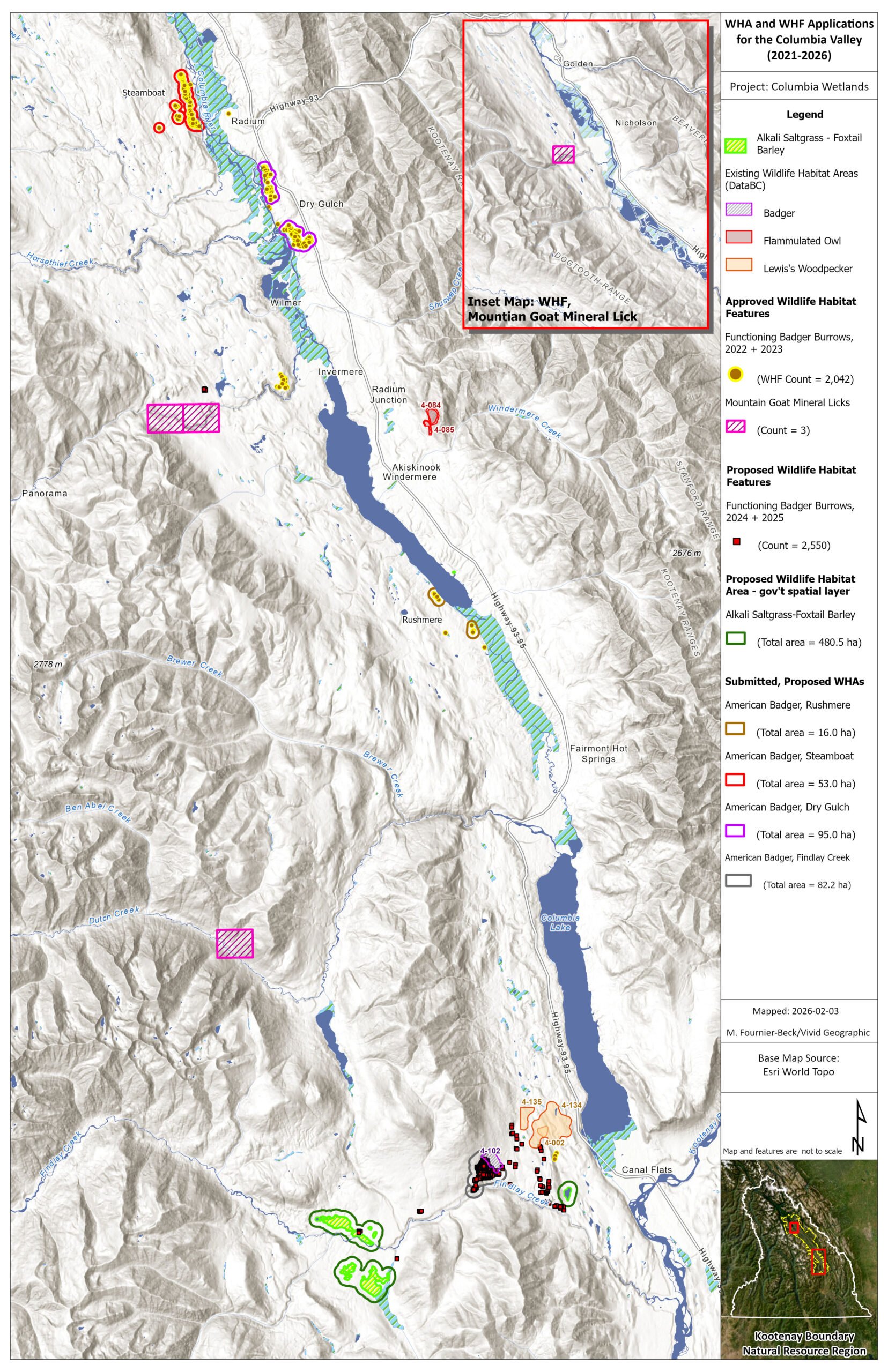
This map shows Wildlife Habitat Areas (WHA) and Wildlife Habitat Features (WHF) applications for the Columbia Valley (2021 to 2026).
Year 6 Highlights (2024-25)
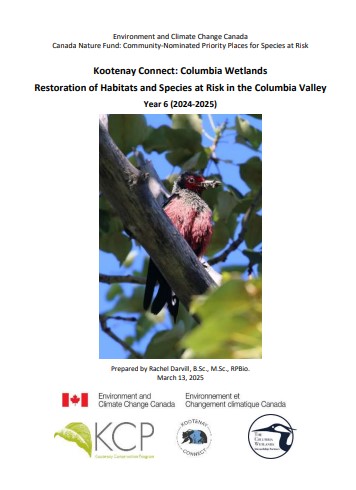
For the sixth year in a row, the Columbia Wetlands Stewardship Partners continued to advance conservation action in the Columbia Valley through the Kootenay Connect initiative. Four species-at-risk (SAR) sub-projects focused on Western Painted Turtle – Intermountain – Rocky Mountain population (Chrysemys picta pop. 2), American badger (Taxidea taxus jeffersonii, eastern population), Osprey (Pandion haliaetus) and Lewis’s woodpecker (Melanerpes lewis).
Year 5 Highlights (2023-24)

In the fifth year (2023-24) of working on the Kootenay Connect initiative, the Columbia Wetlands Stewardship Partners (CWSP) was contracted to operate the continuation of Years 1-4 (2020-23) of species at risk conservation and inventory work in the Columbia Wetlands. This project was comprised of three main components designed by Goldeneye Ecological Services to: 1) improve Western Painted Turtle (WPT) habitat based on Years 2 and 3 inventories and Year 4 enhancements; 2) continue Years 2-4 monitoring effort for Osprey; and 3) expand Year 4’s inventory of American Badger burrows and habitat to inform applications for Badger Wildlife Habitat Features (WHFs) and Wildlife Habitat Areas (WHAs) in regions identified as federally designated critical habitat. Wildlife Habitat Feature and/or WHA submissions were made for American Badger, Mountain Goat mineral licks, and follow-up was done for alkali-saltgrass ecological community WHAs made previously.

This map provides an overview of applications for Wildlife Habitat Areas (WHA) and Wildlife Habitat Features (WHF) in the Columbia Valley, from 2021 to 2024.
Year 4 Highlights (2022-23)
This video summarizes the Year 4 (2022-2023) activities of the KC-CWSP initiative focused on conservation actions regarding the following: Lewis’s woodpecker, American badger, Osprey, and the Western painted turtle.

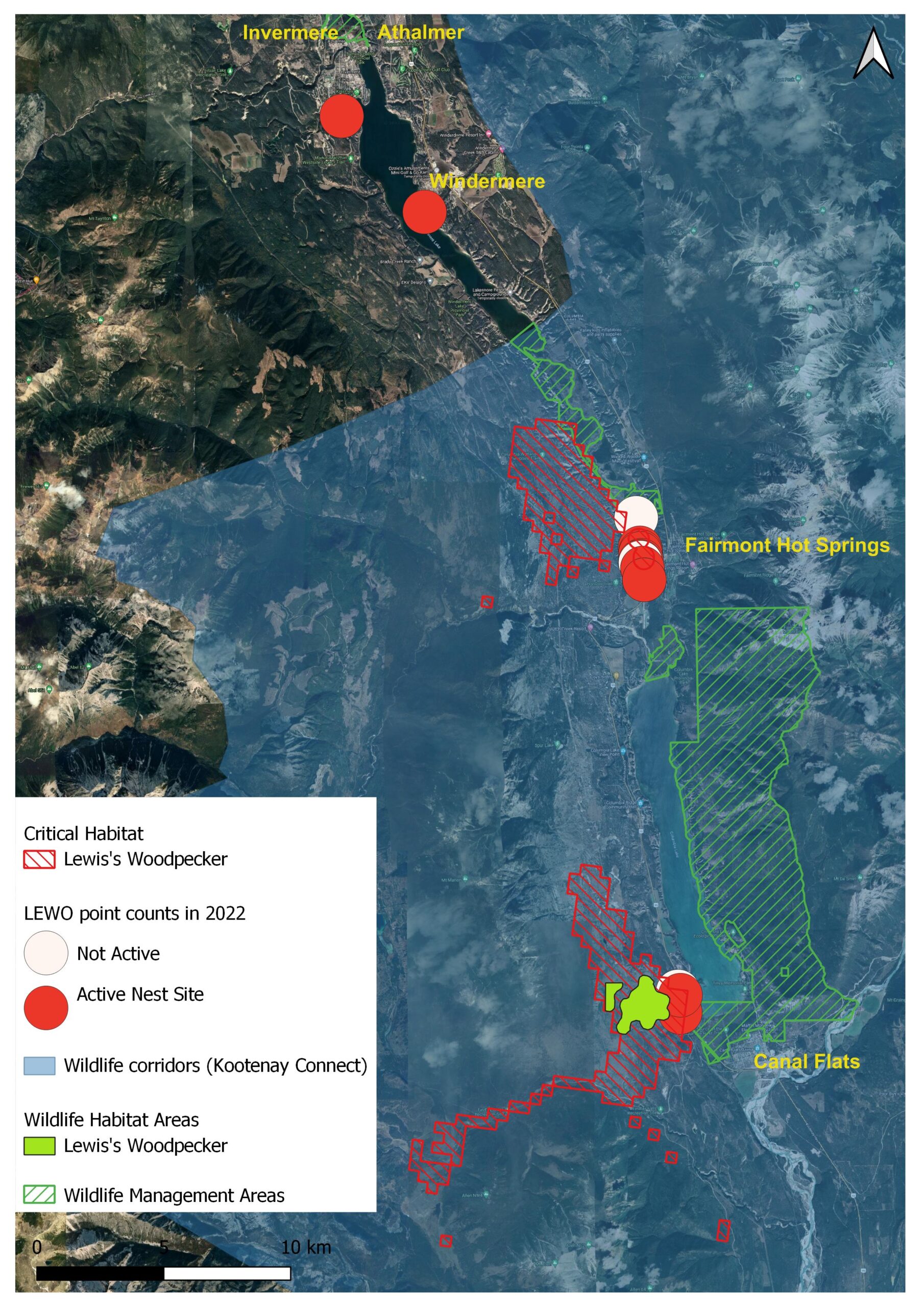
In year four (2022-2023) of the Kootenay Connect project the Columbia Wetlands Stewardship Partners (CWSP) continued work on Species at Risk in the Columbia Valley, from Canal Flats north to Golden. We built upon knowledge gained in previous years and developed conservation actions benefiting four at-risk species: Western painted turtle – intermountain – Rocky Mountain population (Chrysemys picta pop. 2), American badger (Taxidea taxus jeffersonii, eastern population), Lewis’s woodpecker (Melanerpes lewis), and osprey (Pandion haliaetus).
Year 3 Highlights (2021-22)

Year 3 (2021-2022) of the KC-CWSP initiative focused on conservation actions regarding the following: Lewis’s woodpecker, WPT, alkali saltgrass-foxtail barley ecological community (EC), osprey, and American badger. Outcomes regarding actions focused on these four species (and one EC) are outlined in this final report.
Year 2 Highlights (2020-21)
Following the completion of a first-time literature review of species at risk in the Columbia Valley for Year 1 of the Kootenay Connect project, the Columbia Wetlands Stewardship Partners narrowed its scope for Year 2 focusing on 4 species in 2020, and 1 at-risk ecological community.
In the first year of Kootenay Connect (2019-2020) the Columbia Wetlands Stewardship Partners (CWSP) completed the first literature review of species at risk produced for the Columbia Valley. Following up in Year 2 (2020-2021), the CWSP narrowed its scope focusing on four at-risk species : western painted turtle, Lewis’s woodpecker, osprey, and mountain goat; and one at-risk ecological community: alkali saltgrass-foxtail barley. These five components comprise CWSP’s Year 2 project and results and recommendations for each sub-project are provided in this report.
Year 1 Highlights (2019-20)

This report for Kootenay Connect’s Columbia Wetland focal area provides the first comprehensive list of species at risk (SAR) in the 180-km long Columbia Valley, from Canal Flats to Donald. It summarizes research that has been conducted to date for bird, plant, mammal, reptile and amphibian SAR. Findings are that a total of 65 species and 21 ecological communities are at risk in this landscape. The species that remain to be reviewed in detail are at-risk ungulate and carnivore species such as bighorn sheep, mountain goat, and grizzly bear that will be analyzed in Year 2 of Kootenay Connect to help determine the location of high priority landscape level corridors in the Columbia Valley.
An overview of the Literature Review of SAR report.

This map provides an overview of data that are available to identify important areas for species at risk as well as potential wildlife movement corridors in the Columbia Wetlands.

This map provides an overview of data available for the Columbia Wetlands that includes wildlife habitat features, wildlife habitat areas, and critical habitat for species at risk to inform protection and management of wildlife movement corridors and habitat connectivity.


